


In a world where coding can feel like deciphering ancient hieroglyphs, block-based programming swoops in like a superhero with a cape made of colorful blocks. It turns complex programming concepts into a playful puzzle, making it accessible for everyone from curious kids to seasoned techies. Imagine dragging and dropping your way to coding mastery—no more headaches from syntax errors or endless debugging!
Overview of Block-Based Programming
Block-based programming represents a user-friendly approach that makes coding accessible to a wide audience. This method utilizes a visual interface where users create programs by snapping together blocks, resembling puzzle pieces. That design facilitates an immediate understanding of programming concepts without the need for complex syntax.
Children often find it intuitive, as it resonates with their natural playfulness. Experienced programmers appreciate the ability to prototype ideas quickly. Visual representation of code blocks eliminates common pitfalls associated with traditional text-based programming, such as syntax errors and the intimidating debugging process.
Various platforms, like Scratch and Blockly, exemplify this approach, catering to different age groups and skill levels. Scratch engages young learners in creative ways, utilizing a storytelling format for coding projects. Conversely, Blockly offers a more structured environment that can transition users to advanced programming languages.
Research indicates that learners using block-based programming show greater engagement and motivation. Participants in educational environments often gain a stronger foundation in computational thinking. These platforms not only teach coding but also foster problem-solving skills and logical reasoning.
Block-based programming cultivates collaboration among users, allowing them to share and remix projects. Communities around these platforms enhance learning opportunities through shared resources. Users develop vital skills while engaging with peers, ultimately preparing them for more advanced programming challenges.
Key Features of Block-Based Programming
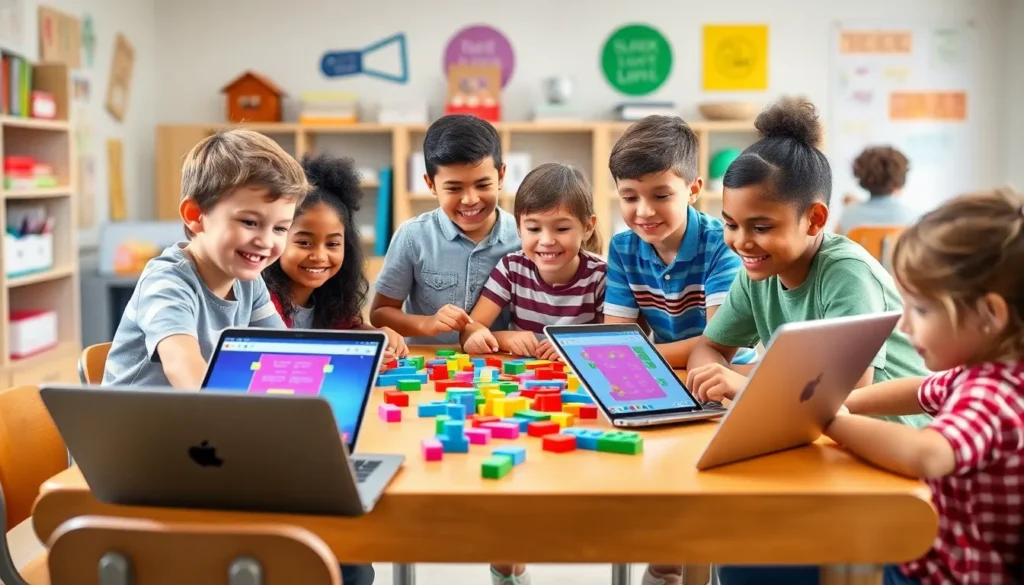
Block-based programming provides an interactive way for individuals to learn coding through visual elements. Users engage in a hands-on experience, crafting code visually without the complexity of traditional syntax.
Visual Interface
A clear visual interface characterizes block-based programming. Users see colorful blocks that represent different programming commands, making it easy to understand functions and sequences. This design encourages experimentation, as users can drag and drop blocks to create new scripts rapidly. Clarity and organization in the layout help maintain focus on the learning process, reducing cognitive overload. Children benefit from this engaging format, while experienced programmers appreciate how easily they can prototype ideas. Platforms such as Scratch and Blockly embrace this visual approach to teach various programming concepts effectively.
Code Efficiency
Code efficiency improves significantly in a block-based environment. Users avoid common errors associated with traditional programming, such as syntax mistakes. By utilizing predefined blocks, programmers reduce the time spent debugging, allowing for quicker project iterations. This efficiency encourages experimentation and innovation. Streamlined processes result in cleaner, more effective code, which is vital for creating functioning applications. Block-based programming serves as an excellent starting point for beginners, establishing a foundation for users to transition to more complex programming languages in the future.
Popular Block-Based Programming Platforms
Several platforms demonstrate the potential of block-based programming. These tools cater to various age groups and skill levels, ensuring accessibility and engagement.
Scratch
Scratch serves as a leading platform among young learners. Designed for ages 8 and up, it enables users to create interactive stories, games, and animations using a drag-and-drop interface. By organizing code blocks in a user-friendly manner, Scratch encourages creativity and collaboration. Its strong community allows users to share projects, remix existing ones, and gain inspiration. This environment fosters problem-solving skills and strengthens computational thinking among children. Support materials, including tutorials and coding challenges, enhance learning opportunities and allow for an enriched educational experience.
Blockly
Blockly prioritizes structured programming through its visual interface. Aimed at both beginners and experienced users, it allows for straightforward programming using blocks that represent code constructs. Users can manipulate these blocks, creating a seamless workflow similar to traditional programming languages. Blockly’s integration with educational tools and platforms enables a smooth transition to programming concepts. Moreover, this platform supports multiple programming languages, increasing its versatility and appeal. Its customization options further enhance user experience, ensuring learners develop fundamental coding skills effectively.
Tynker
Tynker provides an engaging environment for coding education. Suitable for children aged 7 and above, it combines storytelling with game design, fostering creativity. Users can explore various coding concepts through themed lessons, projects, and interactive challenges. Tynker promotes a gamified learning experience that motivates students to practice coding regularly. Furthermore, it offers resources for educators, enabling seamless integration into curriculums. By supporting collaborative projects and a peer-sharing platform, Tynker facilitates learning through community engagement, enriching students’ coding skills in the process.
Applications of Block-Based Programming
Block-based programming finds various applications across multiple fields, particularly in education and game development.
Education
In educational settings, block-based programming serves as an effective entry point for students of all ages. It promotes hands-on learning by allowing users to create projects that demonstrate coding principles. Teachers often incorporate platforms like Scratch and Blockly into their curricula to enhance engagement and retention. Research suggests that students gain critical computational thinking skills while enjoying a creative outlet. Collaborative projects foster teamwork, enabling learners to share ideas and refine their problem-solving abilities together. With tools designed specifically for young users, educational institutions prepare students for more advanced programming concepts down the line.
Game Development
Game development also benefits significantly from block-based programming. Developers create interactive experiences without delving into complex coding languages. Tools like Tynker allow aspiring game designers to craft their own games using intuitive drag-and-drop mechanics. This accessibility encourages creativity, allowing users to focus on gameplay and storytelling rather than syntax errors. As a result, many budding developers gain confidence in their skills, leading to the production of original games suitable for a wide audience. Engaging in game design through block-based programming empowers individuals to explore innovative concepts while honing their coding abilities simultaneously.
Benefits of Block-Based Programming
Block-based programming offers many advantages that cater to diverse learners. Its user-friendly interface encourages engagement and fosters a solid foundation in coding.
Accessibility for Beginners
Accessibility remains a primary benefit of block-based programming. Users need no prior programming knowledge to start coding with platforms like Scratch and Blockly. Colorful blocks snap together effortlessly, allowing beginners to see how commands connect logically. Learning becomes intuitive as users drag and drop blocks, eliminating frustration tied to syntax errors. Visual coding constructs foster confidence, making programming approachable for all ages. Children especially find joy in creating projects, and teachers can incorporate these tools seamlessly into classroom settings.
Encouragement of Logical Thinking
Encouragement of logical thinking thrives in block-based programming environments. Users train their minds to break down problems into manageable steps. Logical sequences become apparent when assembling blocks, prompting users to think critically about how code structures application functionality. As they experiment with projects, they develop problem-solving skills necessary for coding and real-life scenarios. Research supports that early exposure enhances cognitive abilities, paving the way for advanced programming. Consequently, students engage in collaborative projects, further solidifying their understanding of logic and computation.
Block-based programming stands out as a transformative tool in the coding landscape. Its visual and interactive nature makes it accessible for learners of all ages. By simplifying complex concepts and minimizing errors, it nurtures creativity and logical thinking.
As users engage with platforms like Scratch and Blockly, they not only develop coding skills but also enhance their problem-solving abilities. The collaborative aspect of these platforms fosters a sense of community, encouraging users to share and remix projects.
Ultimately, block-based programming lays a solid foundation for future learning in more advanced programming languages while empowering individuals to explore their creativity in a supportive environment.


